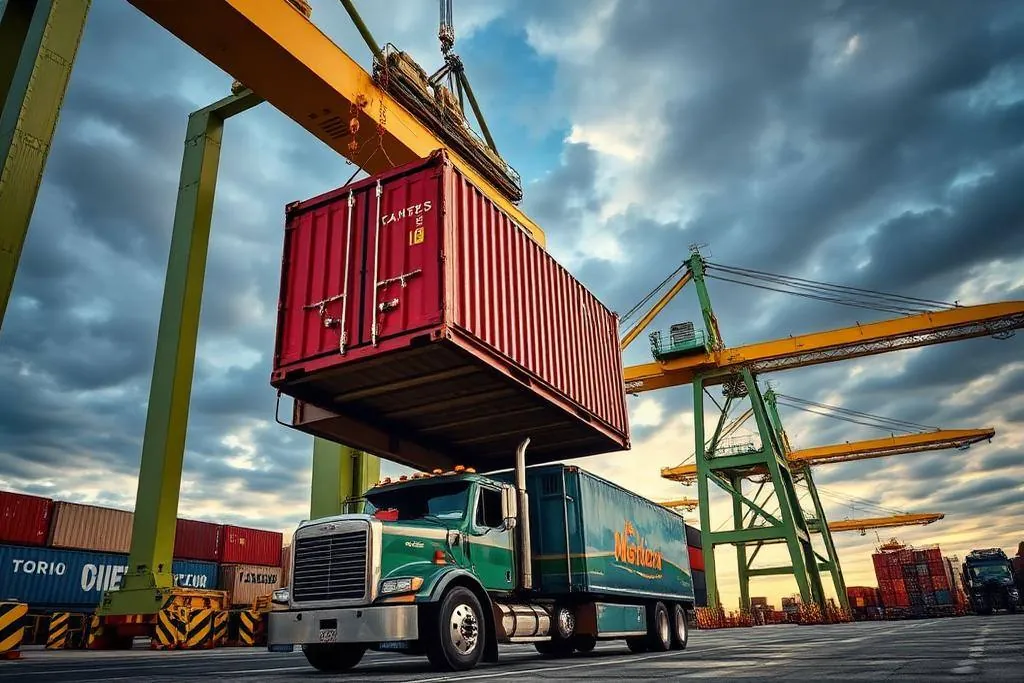
There is a particular sound a drayage dispatcher learns to dread. It is the sound of a phone call at 6:40 in the morning telling you that a vessel is twelve hours late, the terminal is stacked five-high, and the appointment you fought for at 8:00 has evaporated.
For twenty years, a lot of those calls in Hampton Roads traced back to one stubborn physical fact: the water wasn't deep enough. Ships waited on tides. Ships lightened their loads. Ships took turns in a channel too narrow for two of them to pass. Every one of those delays eventually rolled downhill and landed on a chassis, a driver, and a customer's receiving dock.
That fact is now gone.
On February 28, 2026, dredging crews finished the last of the work on the Norfolk Harbor and Channels project. On June 18, the Port of Virginia and the Governor's office made it official at Norfolk International Terminals. The channel went from 50 feet to 55 feet — passing Charleston's 52 feet to become, in the Commonwealth's words, "the deepest commercial shipping channel on the entire East Coast of the United States."
And it got wider, which matters just as much.
We move containers in and out of NIT and VIG every single day. So let's skip the ribbon-cutting language and talk about what this actually changes, who it changes it for, and what it means for the region we live in.
What Actually Got Built
The headline number is 55 feet. But the number that matters more to freight economics is the one nobody puts on a banner: width.
Dredging began in December 2019. Since 2023 it has sat inside a broader capital push the Port calls the Gateway Investment Program — roughly $1.4 billion across four major projects:
| Project | Investment | Status |
|---|---|---|
| Channel deepening to 55 ft & widening | $450 million | Complete (Feb 2026) |
| Central Rail Yard expansion at NIT | $83 million | Complete (Aug 2024) |
| Portsmouth Marine Terminal conversion | $220 million | Complete |
| NIT North Berth renovation | $650 million | ~50% done, due mid-2027 |
The widening finished in February 2024; the deepening wrapped two years later. Together they let two ultra-large container vessels pass each other, in opposite directions, at the same time — including ships north of 20,000 TEU.
That is the whole ballgame, and it deserves a plain-English explanation.
Why "Two-Way Traffic" Is the Real Story
Before the widening, a 16,000-TEU vessel inbound to Norfolk effectively owned the channel. Nothing that size was coming the other way. Ships queued. Pilots scheduled around each other. An outbound sailing could wait on an inbound arrival for hours.
Multiply that by every ULCV call, every week, across a year, and you get a structural tax on the whole gateway.
Now the channel is wide enough for simultaneous passage. The Port reports the result has already cut vessel port stays by up to 15%.
The Virginia Port Authority's chief executive put the economics of it better than most trade publications have:
"Time creates cost. Cost is what you and I — the consumer, the family — ultimately pays."
She is describing a chain that most people never see. A vessel that sits an extra ten hours at anchor is burning fuel and crew time, and that shows up in the ocean carrier's rate. It also cascades: a late vessel discharges late, which means the terminal works the box late, which means the container isn't available on the day the dray was scheduled, which means the truck either sits or gets re-dispatched, which means detention, which means a demurrage clock somebody is going to pay.
We live in the last two links of that chain. When the vessel is on time, our drivers make their appointments. When it isn't, no amount of dispatch skill fully saves the day.
Deeper water and a wider channel attack that problem at the source.
The Second Thing Almost Nobody Talks About: The Rail Yard
Everyone covered the dredging. Fewer people covered the $83 million Central Rail Yard that went into service at Norfolk International Terminals.
It added capacity for another 455,000 rail TEUs a year — roughly a 31% increase — and brought the Port's total rail handling capacity to 2 million TEUs annually, moved by three all-electric cantilever rail-mounted gantry cranes, with double-stack service from both Class I railroads, Norfolk Southern and CSX.
Why does a trucking company celebrate a rail yard?
Two reasons.
First, it's a congestion release valve. Hampton Roads roads are finite. Hampton Boulevard was busy before any of this, and residents and local officials have been openly concerned that a bigger port means more trucks through neighborhoods. Port leadership's answer has been to push a larger share of inland-bound cargo onto on-dock rail. Every box that leaves NIT on a stack train is a box that doesn't grind through a tunnel at 4:00 p.m. That's better for the neighborhood, and it's better for the truck moves that genuinely have to happen by road — the regional and local drays that no railroad will ever serve.
Second, it changes what "port-adjacent" means. On-dock double-stack service reaches Chicago, St. Louis, and Kansas City. The Virginia Inland Port sits roughly 220 miles inland at Front Royal, within easy reach of Washington, Baltimore, and the Mid-Atlantic distribution belt. Virginia's effective service area is much larger than a map of Hampton Roads suggests — a shipper in Ohio and a shipper in Chesapeake can both be Port of Virginia customers for completely different reasons.
What's Still Coming: The North Berth and 5.8 Million TEUs
The work isn't finished. The $650 million North Berth renovation at NIT is about halfway done and scheduled for mid-2027. It brings four new low-profile ship-to-shore cranes and delivers the Port's fifth ULCV-capable berth — four are already in service.
When it's finished, the Port of Virginia projects annual throughput capacity of 5.8 million TEUs.
Set that against what actually moved through in 2025 — about 3.23 million TEUs — and the significance becomes obvious. This is a gateway with roughly 80% headroom above current volume, at a moment when most of the East Coast is fighting over capacity it doesn't have.
Port leadership frames the strategy as a magnet, not a monument:
"We want to run the most efficient port in America so that it is a business magnet."
That is the part shippers should pay attention to. Depth alone doesn't win cargo. Depth plus width plus rail plus berth capacity plus predictable gate performance wins cargo — because it lets an ocean carrier plan a rotation around Norfolk without building slack into the schedule.
What This Means If You're a Shipper, Importer, or BCO
Strip out the civic pride and here's the practical read.
1. Bigger ships will call Norfolk, and that means more direct service.
Carriers cascade their largest vessels onto strings that can actually handle them. A no-tidal-restriction, two-way, five-ULCV-berth port is a place you can put a 16,000+ TEU ship without a naval architect's blessing. More direct calls means fewer transshipments, and fewer transshipments means fewer places for your box to go missing.
2. Your landed cost has a new lever.
If vessel port stay drops, schedule reliability rises. If schedule reliability rises, you can carry less safety stock. Inventory carrying cost is real money, and it's the kind of savings that never shows up on a freight invoice — which is exactly why most shippers under-count it.
3. Routing through Virginia gets more attractive versus the alternatives.
For cargo destined for the Mid-Atlantic, the Southeast, and the Ohio Valley, the calculus of "which East Coast port" is shifting. Virginia's combination of channel depth, on-dock double-stack rail, and available terminal capacity is a different proposition than it was three years ago.
4. But none of it helps you if the last 50 miles are broken.
This is the honest part. A 55-foot channel does not unload your container. It does not chase a hold, grab an early appointment, find a chassis on a tight day, or get a box to a Suffolk warehouse before a receiving cutoff. Port infrastructure sets the ceiling. Your drayage execution decides where under that ceiling you actually land.
We've watched shippers spend a year negotiating ocean rates and then lose the savings in a month of missed appointments and per-diem. The gateway is getting better. The gap between a good drayage partner and a mediocre one is getting wider, not narrower, because there's now more upside available to whoever can actually capture it.
What It Means for Hampton Roads
An economic impact study prepared for the Virginia Port Authority by The College of William & Mary puts the Port's annual contribution at $63 billion in Virginia gross state product — about 10% of the state total — supporting 565,000 full- and part-time jobs, or roughly 11% of all employment in the Commonwealth.
Growth on that scale is not free, and the region knows it. More cargo means more chassis, more truck trips, more pressure on Hampton Boulevard and the tunnel crossings. That's a legitimate concern from residents, and the answer can't only be "build more road."
The rail-share strategy is part of the answer. So is the ongoing Hampton Roads Bridge-Tunnel expansion, which adds capacity to one of the most constrained corridors in the state. And so — less visibly — is operational discipline from the carriers who work these terminals: running dual transactions instead of empty legs, staging containers efficiently, using off-peak windows, and keeping equipment out of the neighborhoods that don't need to see it.
The companies that grow here have an obligation to be good at that. We take it seriously, because we live here too.
The Bottom Line
The Port of Virginia spent six years and $1.4 billion removing a physical constraint that had shaped East Coast shipping for a generation. As of 2026, the water is 55 feet deep, the channel is wide enough for two giants to pass, the rail yard can move 2 million TEUs a year, and a fifth ULCV berth is a year out.
One line from the June 18 announcement is the one worth remembering:
"Delivering projects like the 55-foot channel are important today, but the real value is in how these projects position us for the future."
That future runs through Norfolk, Portsmouth, and Suffolk — and it runs on trucks, chassis, and drivers who know these gates.
Moving Freight Through the Port of Virginia? Let's Talk.
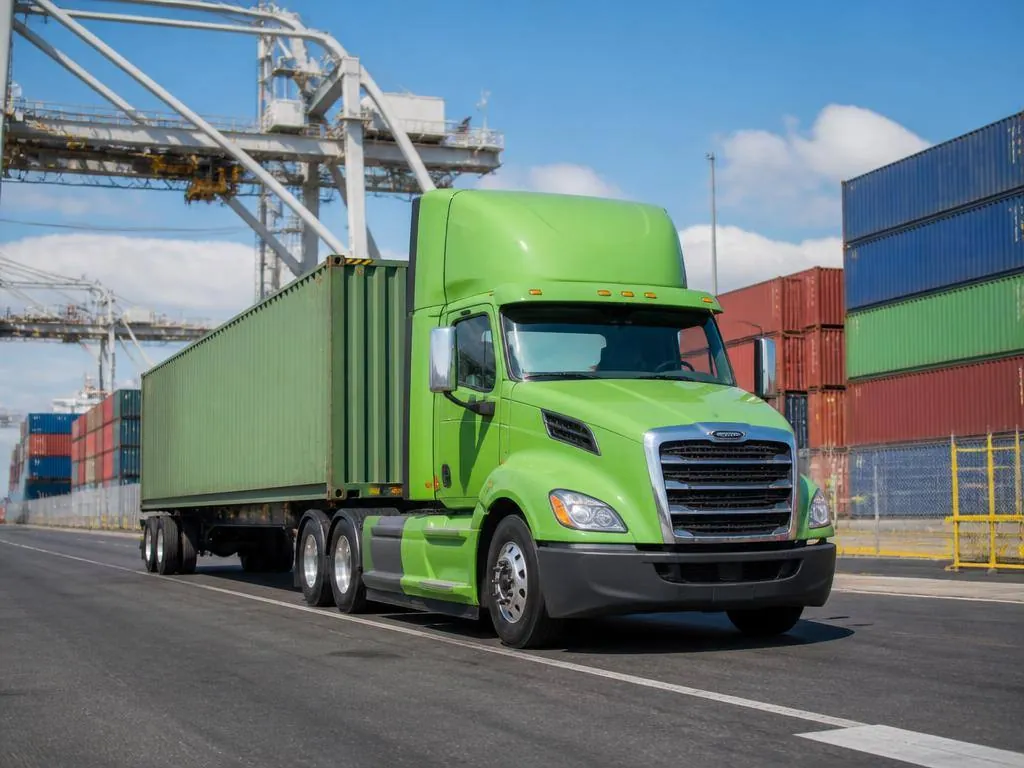
DPN Companies is a Portsmouth, Virginia–based transportation and logistics group built around the Port of Virginia. We run a 60+ truck drayage fleet serving Norfolk International Terminals (NIT) and Virginia International Gateway (VIG), backed by warehousing and transloading through East Coast Warehousing and brokerage capacity through Blue Dolphin Logistics for Southeast and Mid-Atlantic lanes.
We are an asset-based carrier headquartered minutes from the berth, with our own equipment, our own drivers, and our own dispatch — which means when a vessel moves, we move with it.
📍 2309 County St, Portsmouth, VA 23704
Frequently Asked Questions
How deep is the Port of Virginia channel now?
The Norfolk Harbor channel is 55 feet deep as of February 2026, up from 50 feet, making it the deepest commercial shipping channel on the U.S. East Coast — ahead of Charleston at 52 feet. The channel was also widened, allowing two ultra-large container vessels to pass simultaneously.
What is the Gateway Investment Program?
It is the Port of Virginia's roughly $1.4 billion capital program, covering the $450 million channel deepening and widening, an $83 million Central Rail Yard expansion at NIT, a $220 million Portsmouth Marine Terminal conversion, and the $650 million NIT North Berth renovation due in mid-2027.
How much cargo can the Port of Virginia handle?
The Port moved about 3.23 million TEUs in 2025 and projects annual capacity of approximately 5.8 million TEUs once the North Berth project is complete in 2027. Rail capacity alone is 2 million TEUs annually.
Does the deepening lower shipping costs?
Indirectly, yes. Larger vessels moving more efficiently and spending less time in port reduce per-container ocean costs, and improved schedule reliability reduces inventory and detention costs further down the chain.
Which terminals does DPN serve?
DPN's drayage fleet serves Norfolk International Terminals (NIT) and Virginia International Gateway (VIG), with warehousing, transloading, and brokerage available for Southeast and Mid-Atlantic lanes.
Sources: Port of Virginia news releases (June 18, 2026), Office of the Governor of Virginia (June 18, 2026), Virginia Port Authority economic impact study, The College of William & Mary, Virginia Business, WTKR, WTVR.